There is genuine culinary magic in dessert-inspired craft cocktails. Traditional drinks often lean toward bitter or sour notes. In contrast, confection-forward drinks turn beloved treats into sophisticated evening pours.
The Butterfinger Cookie Cocktail celebrates that playful culinary evolution. It pairs smooth Kentucky bourbon with rich chocolate liqueur. In addition, it features artisanal Butterfinger syrup and Licor 43 Caramel Cookie Liqueur.
A splash of fresh lemon juice cuts through the sweetness. As a result, the drink remains wonderfully crisp and balanced. It delivers rich nostalgia with every single sip.
Many cocktail purists initially dismiss sweet drinks as simple indulgences. However, crafting balanced dessert libations requires serious technical discipline. You must balance heavy syrups with alcohol proof and bright acidity. When executed properly, the result is complex, smooth, and memorable.
This recipe reimagines candy flavors through a sophisticated mixology lens. It transforms childhood memories into an adult evening ritual. Let us explore the rich background of chocolate mixology first.
The Historic Roots of Chocolate in Early Saloons
Long before modern craft cocktail lounges existed, early taverns embraced chocolate cordials. Nineteenth-century bartenders viewed cocoa drinks as hearty, comforting restoratives. They frequently served warm chocolate mixtures during brutal winter months.
In legendary early saloon guides, bartenders documented steaming chocolate punches. Bar keepers carefully blended dark cocoa cordials with warm whole milk. Frequently, they whisked in fresh farm eggs, raw sugar, and freshly grated nutmeg.
Patrons drank these nourishing concoctions to combat biting cold weather. Others ordered rich flips as morning pick-me-ups after exhausting nights. During this historical era, chocolate represented caloric sustenance and vitality.
Early cocoa mixtures were gritty, thick, and intensely bittersweet. Processing methods back then could not produce modern silky textures. Nevertheless, those robust saloon drinks established an important foundation. They proved that confection flavors belong in serious spirited beverages.
The Golden Age of Crème de Cacao and the 1920s
Distillation and liqueur manufacturing evolved dramatically during the early twentieth century. European distillers perfected techniques to extract pure cacao essence cleanly. They created smooth, translucent spirits called crème de cacao.
Consequently, chocolate mixology entered its first genuine golden era. The 1920s introduced cocktail society to the world-famous Brandy Alexander. That legendary drink combined French Cognac, dark crème de cacao, and heavy cream.
It quickly became the worldwide gold standard for luxurious drinking. High-society bars in London, Paris, and New York served it nightly. Guests adored the velvety mouthfeel and gentle, warming finish.
The Brandy Alexander proved dessert libations could feel exceptionally classy. It bridged the historical gap between European pastry kitchens and cocktail shakers. Furthermore, it demonstrated that cream and dark spirits harmonize beautifully. Because of this cocktail, chocolate drinks secured an enduring place in modern bars.
The Modern Craft Revival: Balance Over Sugar
During the late twentieth century, candy cocktails surged into popular nightlife culture. Lounges began serving whimsical chocolate martinis in frosted glasses. However, many early versions leaned far too heavily on artificial syrups.
As a result, those cocktails frequently tasted overly sweet and cloying. Guests often found them too heavy to finish beyond two sips. Fortunately, modern craft mixology has completely transformed the entire dessert category.
Today, professional bartenders approach sweet drinks with strict culinary precision. We intentionally balance rich confections with high-proof spirits. In addition, we incorporate fresh citrus juices and mineral salts to maintain vitality.
High-end cacao is no longer treated as a cheap sugar substitute. Instead, it serves as an intricate, deeply layered aromatic ingredient. This Butterfinger Cookie Cocktail proudly honors that elevated modern standard.
Deconstructing the Butterfinger Cookie Flavor Profile
A balanced cocktail requires harmony between spirit proof, sugar density, and acid. Every ingredient in this build serves an intentional structural purpose.
Kentucky bourbon establishes an assertive, oak-forward foundation. Its toasted grain notes cut through dense candy syrups effortlessly. Furthermore, charred barrel vanilla naturally accentuates roasted peanut butter notes.
Licor 43 Caramel Cookie Liqueur provides an authentic bakery element. This specialty liqueur captures flavors of toasted biscuits, vanilla bean, and caramelized toffee. It brings genuine cookie dough depth without overwhelming sweetness.
Chocolate liqueur introduces deep, velvet cocoa richness. It provides the essential chocolate baseline that coats the palate smoothly. Meanwhile, artisanal Butterfinger syrup delivers unmistakable nostalgic candy character. You immediately taste roasted peanuts, caramelized sugar, and rich molasses undertones.
Never skip the quarter-ounce of freshly squeezed lemon juice. Citric acid acts like a precision blade against dense sugars. It brightens the palate so every sip feels wonderfully refreshing.
Fine sea salt is an indispensable baking trick that elevates craft cocktails. A tiny pinch sharpens chocolate notes and emphasizes peanut butter flavors. Finally, black walnut bitters contribute an earthy, woodsy background note. They bind the dessert flavors directly to the warm bourbon backbone.
Crafting the Artisanal Butterfinger Syrup
The true foundation of this cocktail lives inside your homemade Butterfinger syrup. Store-bought candy syrups often taste artificial and flat. In contrast, making your syrup from scratch delivers rich, authentic confectionery depth.
Begin by combining one cup of water with granulated and brown sugar. Warm the saucepan over medium heat on your stovetop. Stir gently until all the sugar crystals dissolve completely into clear syrup.
Next, remove the warm saucepan from the heat source. Whisk in a quarter cup of creamy peanut butter until smooth. The residual heat melts the nut butter cleanly into the warm base.
Now, whisk in pure vanilla extract, butter extract, and a pinch of salt. For deeper bakery richness, add an optional splash of maple extract. The combination of butter, vanilla, and roasted peanut butter replicates authentic Butterfinger crunch.
Allow the syrup to cool completely before transferring it to glass bottles. Store your homemade syrup in the refrigerator for up to three weeks. Beyond cocktails, it tastes incredible drizzled over morning waffles or blended into iced lattes.
Glassware Styling and Presentation Tips
Thoughtful visual presentation sets the mood before the first sip is taken. Taking two minutes to prep your glassware makes a dramatic difference.
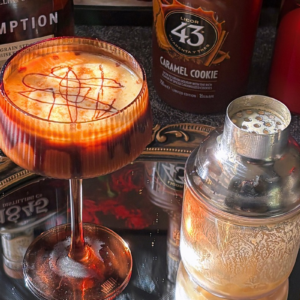
Start with a classic coupe or traditional V-shaped martini glass. Place the empty glassware in your freezer for at least ten minutes. Chilled glass locks chocolate drizzle firmly in place upon contact.
Drizzle rich dark chocolate sauce along the cold interior walls. The sauce sets quickly, creating an artistic lattice pattern. Next, run a lemon wedge lightly along half the rim.
Dip the moistened rim into finely crushed Butterfinger candy crumbs. This garnish introduces crunchy, caramelized texture to contrast the smooth drink. Return the prepared glass to the freezer until you finish shaking.
Mastering the Technique: The Hard Shake and Double Strain
Executing this cocktail properly requires careful attention to dilution and aeration. Confection cocktails demand vigorous technique behind the shaker tin.
First, fill your cocktail shaker with clean, solid ice cubes. Avoid using crushed ice, which melts too rapidly and dilutes flavor prematurely. Seal the shaker tins tightly before you start shaking.
Shake vigorously with enthusiasm for a full 12 to 15 seconds. Strong agitation forces air into the dense syrups and rich liqueurs. Consequently, a gorgeous, velvety micro-foam forms across the surface.
Next, prepare both a Hawthorne strainer and a fine-mesh tea strainer. Always double strain this cocktail into your chilled presentation glass. The fine-mesh strainer catches tiny ice shards that escape the shaker tin.
Catching those ice fragments preserves an uncompromised, silky smooth texture. Finally, dust the top of the foam with crushed candy crumbs. Serve the cocktail immediately while it is frosty and cold.
Pairing Suggestions for Entertaining
This decadent cocktail shines brightest when paired with complementary dessert courses. Its rich peanut butter and caramel profile flatters diverse bakery treats.
Serve this cocktail alongside warm, freshly baked chocolate chip cookies. The melting chocolate chips echo the cacao liqueur beautifully. In addition, the buttery cookie dough mirrors the Licor 43 notes.
It also pairs magnificently with dark chocolate fudge brownies. The bitter cocoa in rich brownies balances the sweet Butterfinger syrup nicely. Furthermore, the whiskey heat cuts cleanly through dense chocolate crumb.
For a lighter option, serve it beside crisp salted caramel shortbread. The sea salt in the shortbread accentuates the roasted peanuts. Meanwhile, the bourbon provides warmth that rounds out the buttery finish.
Whether served at holiday parties or quiet evenings, it delights guests effortlessly. It turns classic dessert into a memorable, elevated liquid celebration.
Butterfinger Cookie Cocktail

Equipment
Ingredients
- 1½ oz Bourbon
- ¾ oz Licor 43 Caramel Cookie
- ½ oz Chocolate Liqueur
- ½ oz Butterfinger Syrup
- ¼ oz Fresh Lemon Juice
- 1 dash Walnut Bitters
- 1 pinch Fine Sea Salt
- Dark chocolate sauce for glass drizzle and rim
- Crushed Butterfinger candy for garnish

Instructions
- Drizzle dark chocolate sauce inside the walls and around the rim of a chilled coupe or martini glass. If desired, dip one side of the rim into finely crushed Butterfinger crumbs. Place the glass back in the freezer while preparing the drink.
- Add the bourbon, Licor 43 Caramel Cookie, chocolate liqueur, Butterfinger syrup, fresh lemon juice, walnut bitters, and a tiny pinch of salt into a cocktail shaker.
- Fill the shaker with ice, seal tightly, and shake vigorously for 12–15 seconds until the tin is completely frosted.
- Double strain into the chilled glass using a Hawthorne strainer and fine-mesh strainer.
- Garnish the top with finely crushed Butterfinger candy and a light chocolate drizzle. Serve immediately.
- Enjoy!
Notes
Why Acid & Salt Matter: Do not skip the quarter-ounce of fresh lemon juice or the tiny pinch of salt; they sharpen the rich chocolate, cut through dense candy sugars, and prevent palate fatigue.